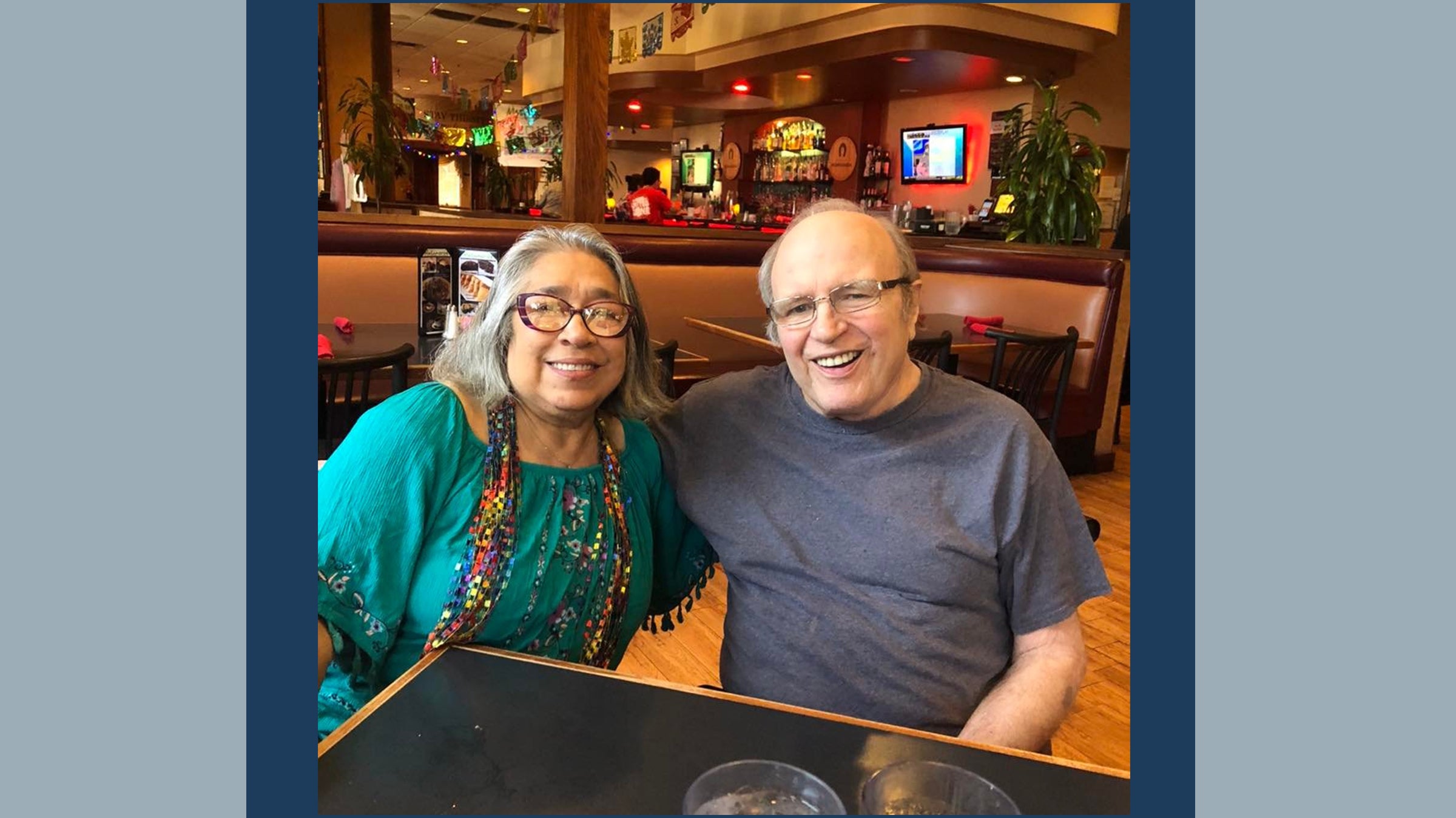
Photo courtesy of Elsa Salazar Cade.
The Department of Integrative Biology honors William H. Cade, an entomologist and UT alumnus who passed away on December 29, 2025 at the age of 79. Born in 1946 in San Antonio, Cade was a proud member of the Tau chapter of the Kappa Sigma fraternity, earning his bachelor’s degree (1966), master’s degree (1972), and PhD. (1976) in zoology from UT Austin.
Cade traveled across Africa with fellow entomologist Dan Otte to research grasshoppers and crickets, and in the 1980s they co-authored several papers. Cade also worked with his wife, retired science teacher Elsa Salazar Cade, doing over three decades of research on the Texas field cricket (Gryllus texensis).
The pair advanced the field of entomology in 1997 with their discovery of the parasitic fly Ormia ochracea. Female O. ochracea are attracted to male crickets’ mating songs and will lay their larvae on or near a male cricket. The larvae then burrow into the male cricket and eat it, and the cricket dies about seven days later when the larvae hatch into pupae. This discovery marked the first instance of an animal using the mating signal of its host or prey as a means to locate it.
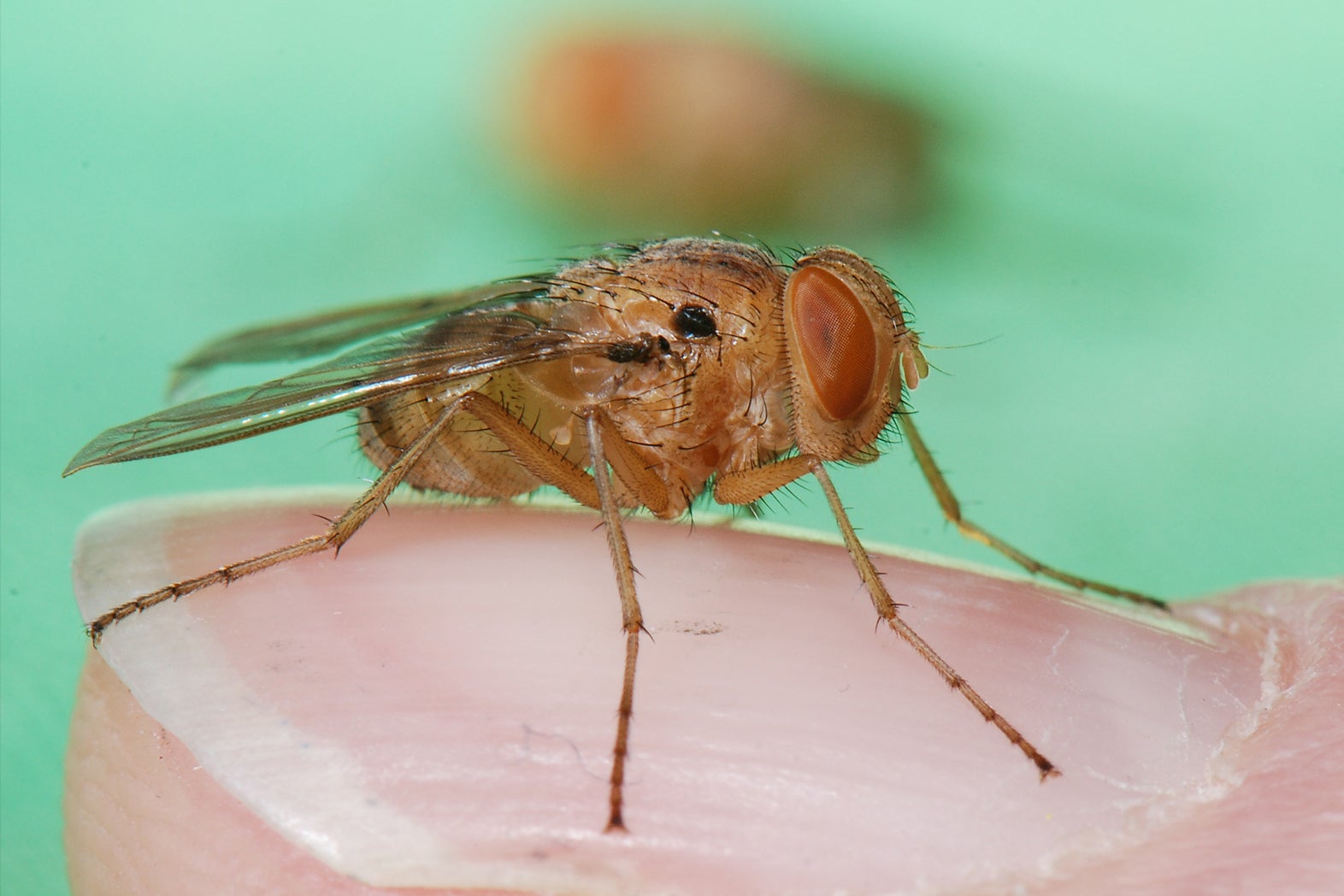
The parasitic fly Ormia ochracea. Photo: Jpaur (icensed under the Creative Commons Attribution-Share Alike 3.0 Unported license.)
Scientists have used Cade’s O. ochracea findings to design better hearing aids. Human ears are far enough apart to tell which direction sounds are coming from, but O. ochracea ears are less than two millimeters apart. These flies use a completely different hearing mechanism to identify sound directionality, making their ability to identify cricket mating calls even more remarkable. By modeling technology after the fly’s uniquely sensitive ears, scientists have built improved directional hearing aids that significantly reduce background noise for the wearer.
Beyond his groundbreaking research, Cade held professorships in Canada at Brock University and the University of Lethbridge, where he also served as president and vice chancellor. He is remembered for his genuine, personal approach to working with students and faculty, as well as his unwavering commitment to research and youth education.
The Cade family was devoted to service, fundraising for supplies and shelter to support survivors of the Haitian earthquake in 2010. Cade was also inducted into the Kainai Chieftainship, an honorary organization capped at forty living members, for advocates of the Indigenous Kainai people in North America. William H. Cade’s legacy will be remembered by the community of his alma mater.